Taking over a restaurant in Berlin? What's a fair price.
What is this "Ablöse"?
Ablöse is what the outgoing tenant or operator wants for leaving: the kitchen, the fit-out, the equipment — and the mere fact that they hold the lease on the space in the first place. In a good Berlin location, you can't really avoid it. Demand is high, good hospitality locations are scarce, and taking over an existing business has become the normal way into the industry. So the question isn't whether you pay. It's whether the asking price is justified.
I've been on both sides of it — as a founder hunting for a space in the right Kiez, and as an operator exiting and selling my own business and its assets. Both times, I was faced with this Ablöse question. Most of the time the number is pie in the sky. The seller demands what they think their space is worth, or what they "need" to walk away with. That's not a proper valuation, and half the time it's bullshit. But not always. Sometimes there's real value sitting in a location that stinks of stale smoke, behind a kitchen dripping with grease. The thing that matters is telling the two apart.
What are you actually paying for?
Not only the furniture and equipment — that's the easy part. The real value sits inside the walls: the existing extraction up to the roof, the electrical power a commercial kitchen needs, the proper drains and grease separation, the HACCP and EU compliance — and above all, the licence to run a professional kitchen in that location at all, the Gaststättenerlaubnis. Getting all of that from scratch, along with the Baugenehmigung and the change-of-use approval that comes with it, can take quite a while in Berlin. When it already exists, it's hard cash — bureaucratic gold.
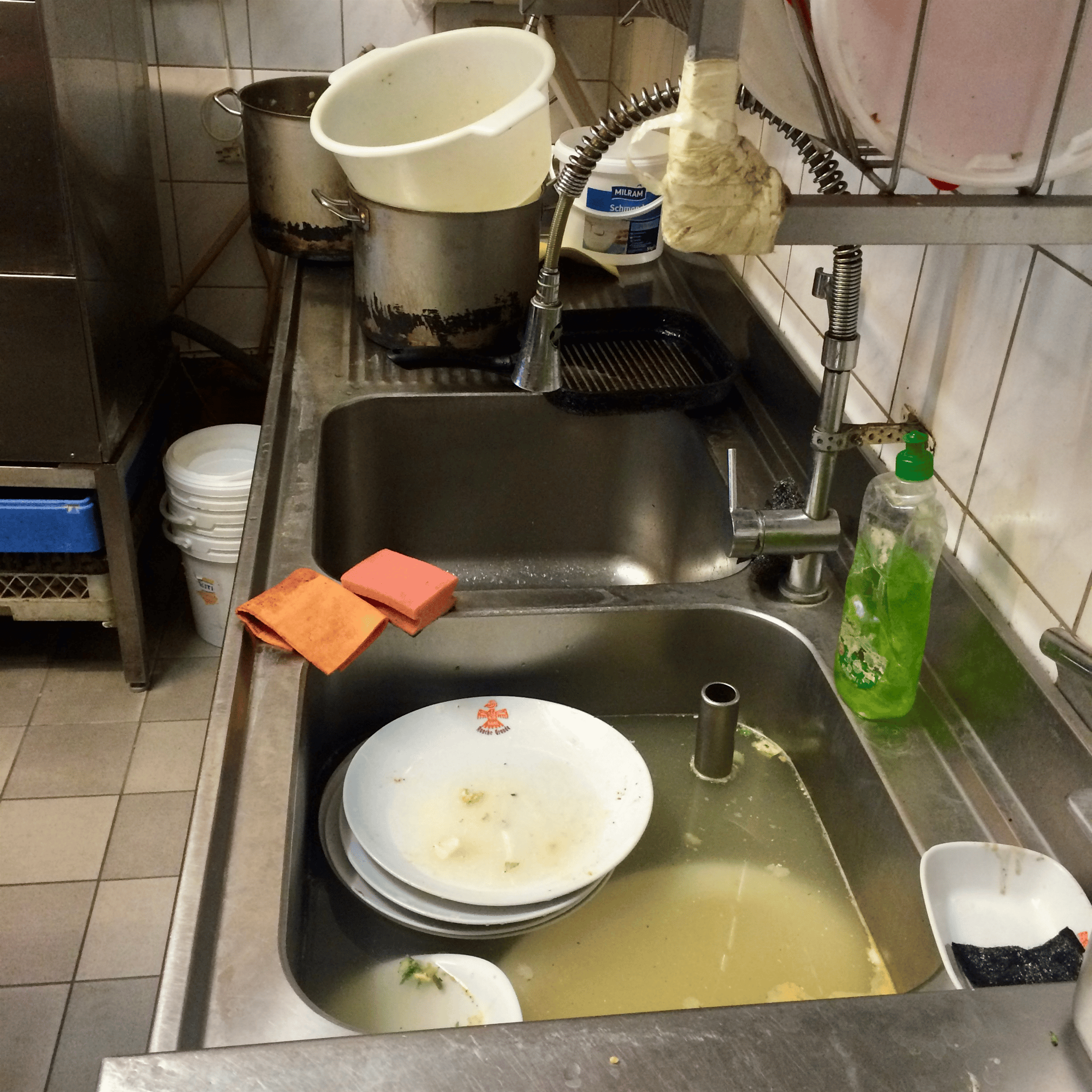
But is the price really fair? Here's how to calculate the Ablöse
There's a simple idea underneath all of this: taking over an existing gastronomy should never cost you more than building the same thing from an empty shell. That saving is your ceiling. Let's work it out piece by piece.
- Cost to build new. What would it cost to turn a shell-and-core space into your shining new restaurant? Kitchen, extraction, electrics, furniture, the lot. In Berlin, roughly €150k to €250k for a small place. That's serious money.
- Cost to fix up what's already there. You're not starting from zero, but you'll still have to adapt the space to your concept and wishes — so that comes off the investment.
- Time saved. A licensed, working location lets you open months earlier than if you built from scratch and waited on permits. In each of those months you earn money you'd otherwise have lost. Multiply the months by your expected monthly profit, then take about 70% of it — because you won't be at full profit from day one anyway.
- Repairs. Whatever you'll have to fix that's tired or broken — also deducted.
- Age of the equipment. Used furniture and equipment is obviously worth less than new. Take off a realistic amount for wear and tear.
Put together:
Fair Ablöse = build-new − fix-up + (months sooner × monthly profit × 70%) − repairs − equipment age
Here it is worked through for a 100 m² restaurant in a good location:
Cost to build new (shell & core)
+ 180k
Adapt the existing space to your concept
− 35k
Time saved — 6 months × €7k × 70%
+ 29.4k
Repairs− 20k
Worn-out equipment
− 20k
Fair Ablöse — ceiling
≈ 134k
So on these numbers, a fair Ablöse tops out at around €134k — the ceiling you would pay, and you negotiate down from there, not up. Sometimes the honest number comes out low, and then a six-figure demand simply isn't justified. Either way, you stop guessing: you walk into the viewing knowing what the number should be, and whether the one on the listing is real.
Selling your business? Give your asking price substance
If you're on the other side — handing over a location you've built up over the years — the same logic applies. In fact, calculating the Ablöse properly is exactly what protects you in negotiations. Most sellers in Berlin just name a figure they feel is intuitively right, or one they "need", then watch buyers chip away at it because they can't see the logic behind the numbers.
I get your position. You've invested a lot and worked long and hard for years. You've built something you're proud of, and it's worth real money when you sell it. A figure you can actually justify works the other way round from a wishful one: a solid Ablösesumme stands up to the buyer's questions and, most importantly, gets your business and its assets sold.
That's my job — together, we calculate a proper valuation for your premises and turn it into a price that holds up in the market. Most brokers in Berlin simply compare a few nearby places or pick a number they think will sell. Just lazy. It's your life's work, and I know exactly what that feels like — so don't get short-changed when selling it. At the very least, test whether your price stands up to scrutiny. It costs you nothing.
Frequently asked questions about Ablöse in gastronomy
Is Ablöse always payable? No. If the furniture, technical infrastructure and equipment carry no real transferable value, the fair price is zero. In good Berlin locations, though, existing businesses are usually the only way to get a space at all — so there, an Ablöse is normal.
How do I calculate a fair Ablöse? Calculate against what you save: cost to build new, minus adaptation, plus the months you open earlier (times monthly profit, times 70%), minus repairs and wear on the equipment. The result is your ceiling, not a target price.
What does Ablöse actually include? Kitchen, fit-out, furniture and equipment — but above all the infrastructure: extraction, electrics, grease separation, sanitary facilities, plus the existing licence (Gaststättenerlaubnis) and approved use. The invisible part is usually the more valuable one.
Is Ablöse negotiable? Yes. An Ablöse is freely agreed between the parties, not a fixed price. Whoever can show their calculation negotiates better — on both sides of the table.
What's the difference between Ablöse and a purchase price? Ablöse covers what the previous tenant leaves behind, and access to the space. When a whole business is sold, a valuation of the company comes on top — earnings, assets and location.
This is general market commentary, not legal, financial or tax advice. Always take professional advice and conduct your own due diligence before committing to any transaction.

