


Friedrichshain · Berlin

Specialty Coffee, Brunch & Interior Design
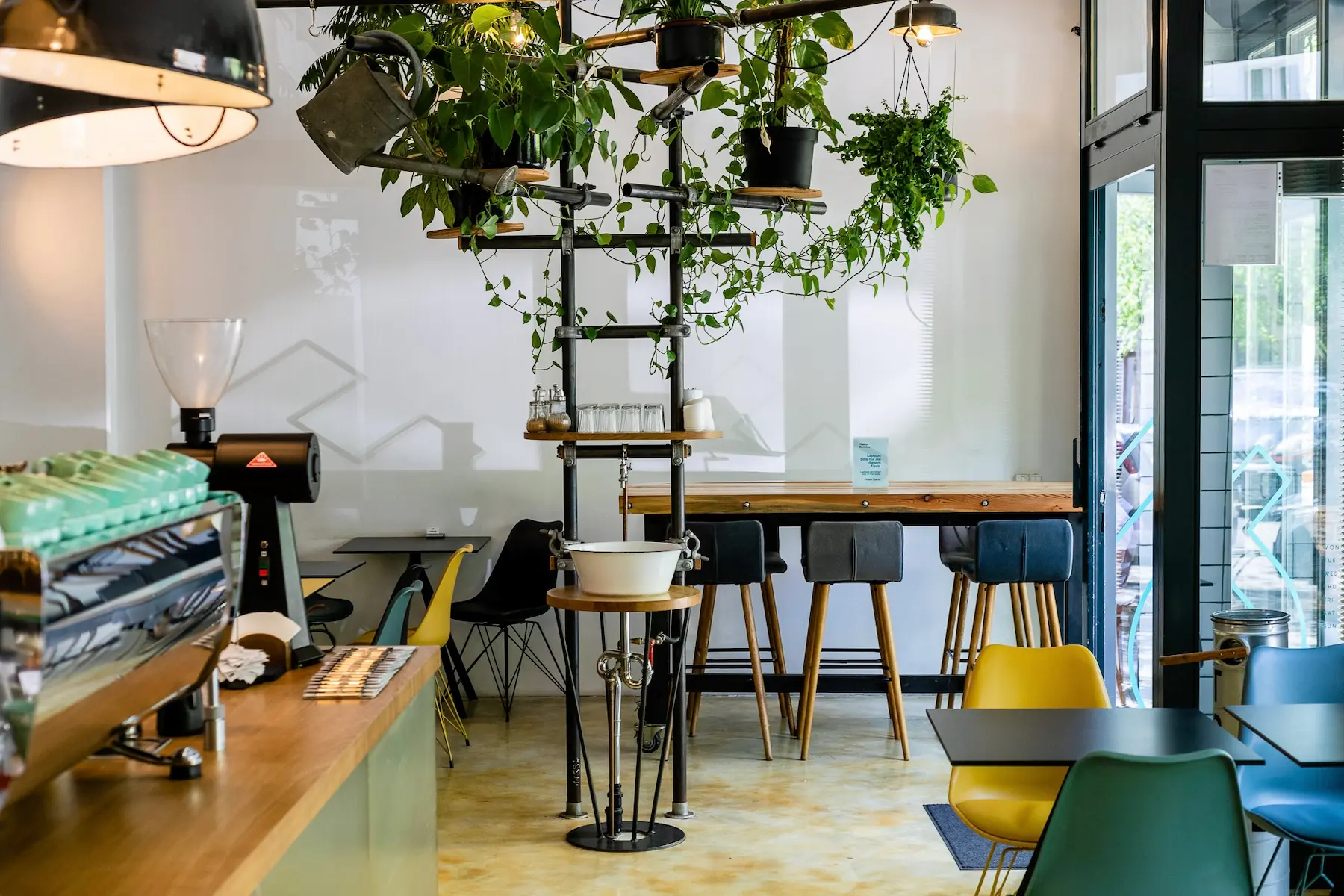
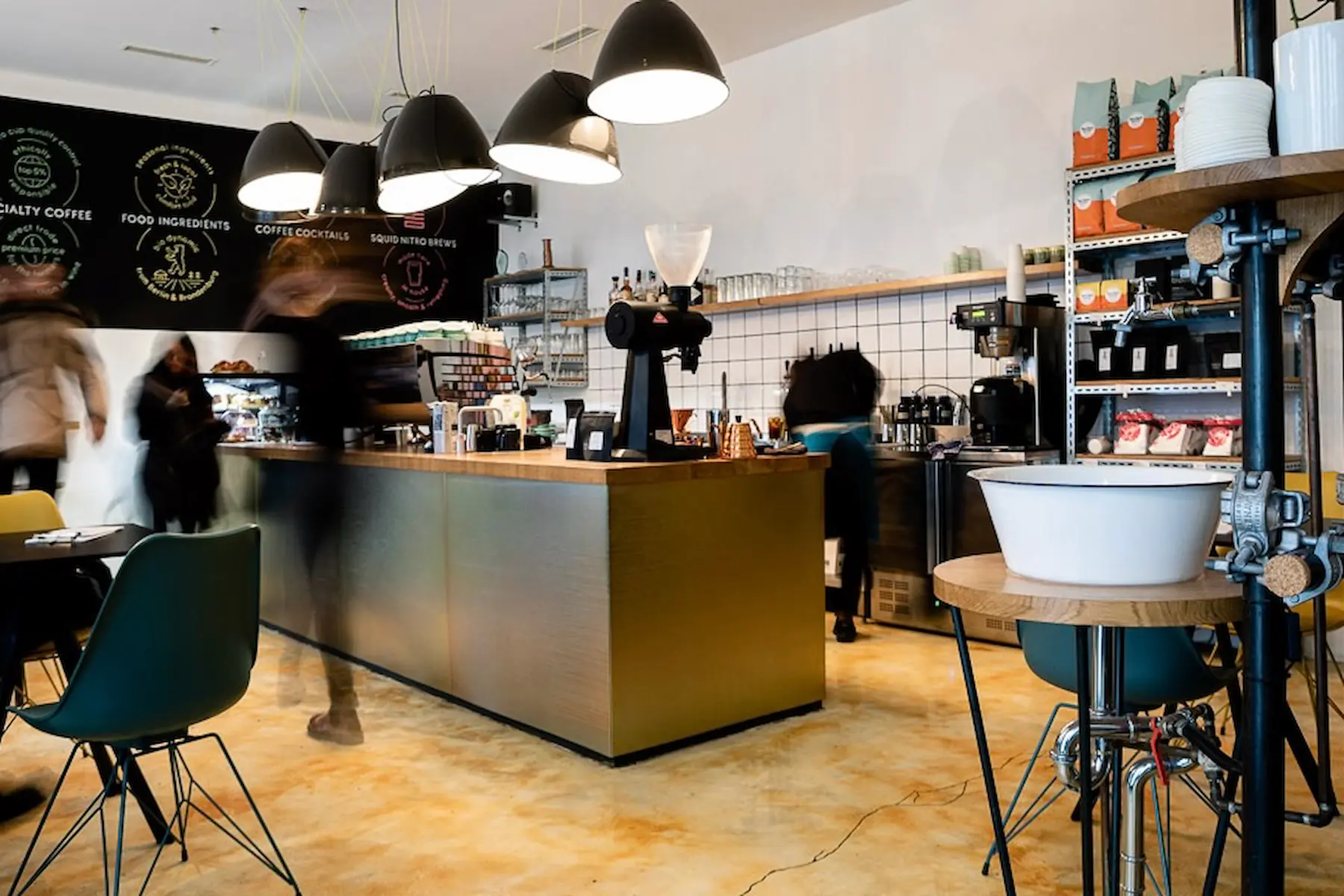
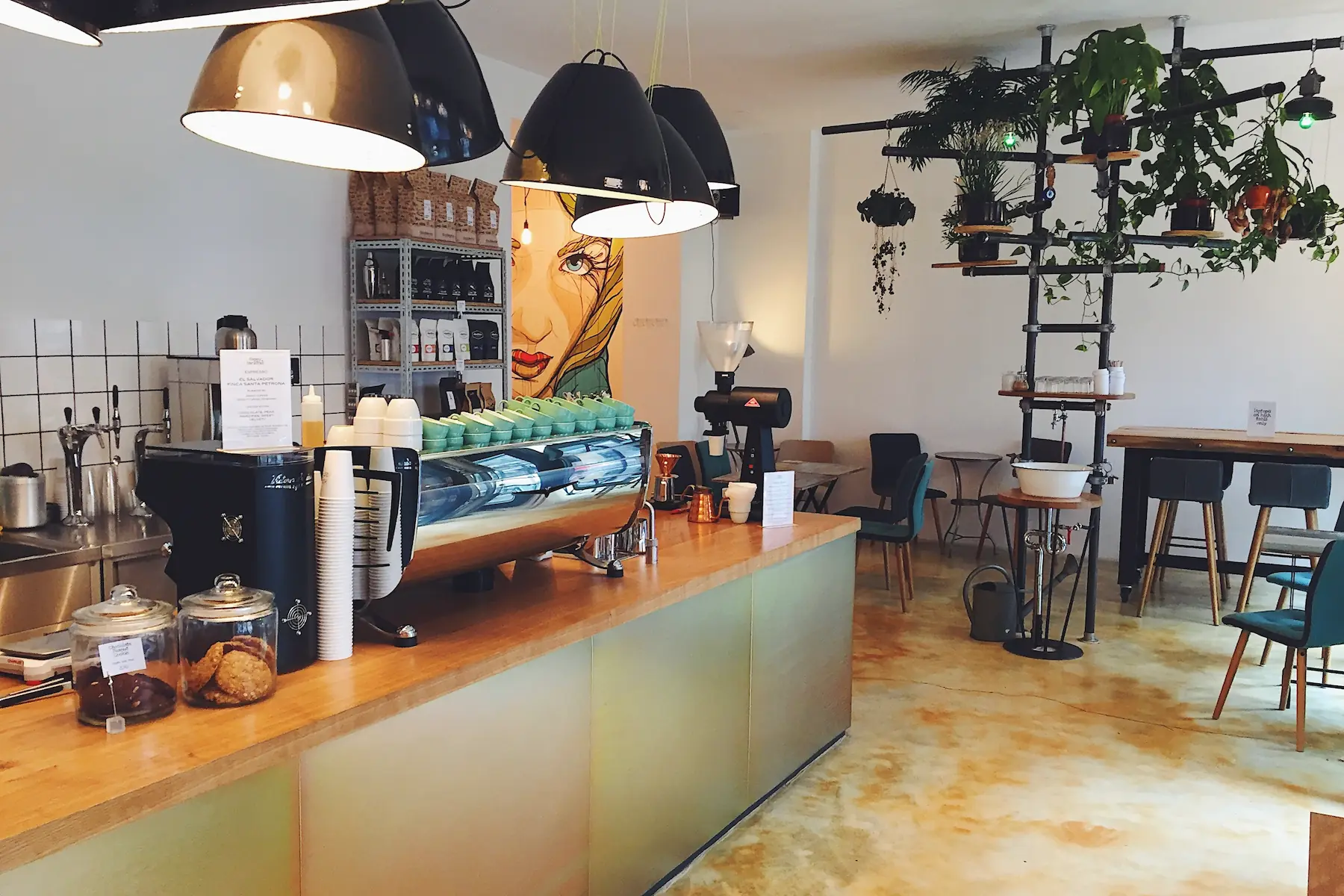
Originally a run-down Mexican restaurant, the property was reimagined, redesigned and redeveloped together with my own construction team into a contemporary specialty coffee and brunch restaurant.
SPATIAL THINKING
More Production Space
After eight successful years of operation, I sold the business and advised the new operators on the property’s next evolution, proposing the removal of selected internal walls to create a significantly larger open-plan production kitchen to match their concept. As hospitality trends and market demands evolved, so did the property’s next chapter—making way for a concept better suited to street food and late-night trade.
Spatial Thinking
The current floor layout combines a generous main dining area with an open bar, a separate guest area, and a functional production kitchen with office and storage space. Easily removing a few internal walls would allow the production kitchen to be significantly expanded, making it ideal for a concept with a stronger focus on street food and late-night gastronomy.

LOCATION
Ostkreuz - East Berlin
The property is located just a short walk from Ostkreuz Station, one of Berlin’s most important transport hubs. The surrounding neighbourhood combines dense residential housing with a diverse hospitality scene, creative businesses and independent retailers. Boxhagener Platz, Simon-Dach-Straße and the R.A.W. district are all within walking distance, creating a steady flow of residents, commuters and visitors throughout the day.
Neighbourhood
Ostkreuz Station · Mixed residential & commercial area · High footfall · Established hospitality destination
About Property
POTENTIAL
Possibilities
The property’s location and layout support a variety of hospitality concepts. Below are three concepts that would be particularly well suited to this space.
PROVEN CONCEPT
Specialty Coffee & Brunch
Successfully operated as a specialty coffee and brunch destination for eight years. The layout supports efficient daytime operations with clear workflows and is ideally suited to a neighbourhood-focused hospitality concept.


EXPANDED PRODUCTION KITCHEN
Street Food & Late Night
Removing a few internal walls would significantly expand the production kitchen, creating the ideal foundation for a street food concept with high production capacity and a strong evening trade.
HYBRID CONCEPT
Casual Dining & Bar
The two separate guest areas naturally support a hybrid concept combining casual dining and a bar, allowing the venue to transition seamlessly from a relaxed daytime atmosphere to a stronger evening-focused operation.

Can a hospitality property be redeveloped for a different use?
Yes. Depending on the location, the property and local planning regulations, a hospitality property can often be redeveloped for an alternative use. My location analysis identifies at an early stage which uses are both commercially viable and likely to receive planning approval. Depending on the concept, shell-and-core properties may also offer an attractive alternative.
Does the hospitality licence transfer with the business?
No. A hospitality licence is issued to the individual operator and does not automatically transfer to the new operator. The necessary requirements are clarified at an early stage to ensure the business transfer is not delayed.
What is the difference between a sale of a going concern and an asset deal?
A transfer of a going concern transfers the business as an operating enterprise — including the lease, fixtures and equipment, employees (where applicable), stock and goodwill — and is exempt from German VAT under Section 1(1a) of the German VAT Act (UStG), provided the legal requirements are met. In an asset deal, individual business assets are acquired, usually plus applicable VAT. The tax implications differ, so both options should be carefully considered.
What is "Ablöse"?
The german term Ablöse is a payment made by the incoming operator for fixtures, fittings and equipment. While it can be calculated relatively easily, it often does not reflect the true value of an operating hospitality business — something a professional valuation is designed to capture.